Cities at War Multiplayer
Six-player servers, city visits, defense, and smart aggression — how to fight without wrecking your own economy.
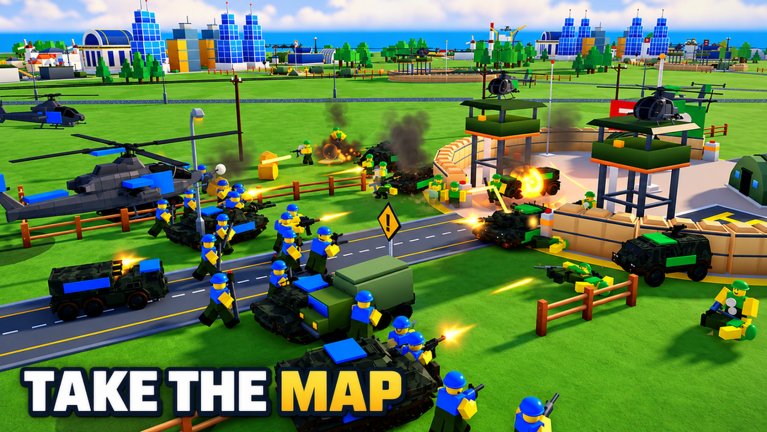
Cities at War is not a solo sandbox that happens to show other names on a leaderboard. Servers support up to six players, and the win condition fantasy — growing a city, then contesting outposts, firebases, oil rigs, and the Capital — collides with everyone else’s treasury. This Players Hub focuses on multiplayer habits: visiting cities, defending yours, reading aggression, and choosing when diplomacy beats a messy war.
Build the economy first with Getting Started, then use soft unit priorities from the Tier List so the fights below are funded.
Server reality: six seats, shared map
With a hard cap of six, every join matters. A quiet server can become a knife fight after two veterans arrive. Before you AFK for offline earnings, glance at:
- How many seats are filled
- Who already holds forward capture points
- Whether your production district looks like an easy smash-and-grab
Offline earnings are a feature of the Simulation / Tycoon design — farms, mines, mills, and housing keep paying while you are away — but empty defenses on a full server invite raids. Schedule longer logoffs for low-population times when you can.
AFK risk rises with discovery. Mid-November 2026 growth (multi-million visits, rising favorites, and busy ~1–2K CCU windows) means more servers fill up and stay contested. If you plan to leave the city running, follow the full checklist on AFK and Offline: finish queues, prep docks, park a home guard, and avoid logging off on hot captures when seats are full.
Visiting other cities
Scouting is part of the game loop. When you visit or observe another city, look for:
- Production density — Are they still on basic farms, or already diversified?
- Housing / builder coverage — A rich-looking skyline with no workers is weaker than it appears.
- Barracks output — Soldiers only, or tanks and air already in play?
- Stockpiles near docks — Players who never sell may be waiting for a price spike — or forgetting to trade.
- Forward bases — Outposts and firebases signal who is already projecting power toward oil rigs or the Capital.
Bring that intel back to your research and barracks plan. The Guides hub explains the peaceful half of the loop; this page covers what you do with the information.
Defending your city
Defense is economy plus presence:
- Keep workers online — Housing and builder huts so repairs and production continue after a skirmish.
- Research army strength before you vanity-spend on unfinished air fleets.
- Leave a home guard — A researched soldier core (see Tier List) beats an all-in attack that returns to ashes.
- Watch dock timing — Panic-selling everything after a raid can lock you out of the next research node.
- Rejoin promptly after a loss — Early patches (~October into November 2026) still reward players who rebuild faster than they rage-quit.
If a fight feels impossible because of exploits, remember: as of November 2026 this wiki lists no verified scripts. Report issues through Roblox and keep playing clean — see Scripts for the safety stance.
Diplomacy vs aggression
With only six players, permanent war against everyone is usually a losing economy. Soft rules of thumb:
- Open with trade focus if two stronger cities already feud — farm the dock meta while they burn units.
- Contest forward points (outposts, firebases) before you declare a Capital run; overextending paints a target on your home.
- Share a quiet border when a neighbor clearly mirrors your power level — mutual non-aggression while you both beat a runaway leader can be rational.
- Break truces the moment they finish a suspicious air spike or sit on an oil rig you need; diplomacy is a tool, not a pinky promise.
- Never trust chat alone — Watch barracks and capture movement more than words.
Aggression pays when your research and income lead, your home guard is set, and at least one rival is distracted. Aggression fails when you are the distraction.
Capture pressure without tunnel vision
The map fantasy climaxes at oil rigs and the Capital, but every captured node is also a billboard that says “raid me.” Sequence matters:
- Stabilize offline income and dock habits (Getting Started)
- Unlock and upgrade a flexible army mix (Tier List)
- Take outposts / firebases you can actually hold
- Time oil and Capital pushes for moments when rival armies are elsewhere
- Escort your own city during the victory lap — six-player servers punish parade routes
After patches and new players
Balance changes tracked on Updates can retune raid difficulty overnight. When new players flood a server, expect messier fights and more empty bases — easy picks if you stay disciplined, chaotic if you chase every scrap.
Promo codes are not a PvP factor yet (none verified for November 2026). Skill expression still comes from trading, research, and army composition.
Related hubs
- Guides — economy and capture systems index
- Getting Started — build the city worth defending
- AFK and Offline — safer logoffs when CCU climbs
- Unit Counters — soft answers before you march
- Tier List — soft unit and building spends for war
- Updates — patch timing that changes fights
- Official Links — real place ID and Snick Co. group
Frequently Asked Questions
Quick answers for Cities at War on Roblox.
How many players are in a Cities at War server?
Up to six. That small cap makes every raid and alliance decision matter — details are throughout this Players Hub.
Can other players attack my city while I am offline?
You should assume contested servers are dangerous when you leave. Secure production, leave a home guard, and prefer low-population times for long AFKs.
Should I always fight the strongest player first?
Not usually. Let rivals clash, fund research, then strike when their armies are committed elsewhere. Soft unit advice lives on the Tier List.
Where do I learn the army unlock order?
Start with economy in Getting Started, then use the Units section of the Tier List and the systems overview in Guides.
Do scripts help in PvP?
We list no verified scripts as of November 2026, and executors risk bans. Win with research, trading, and timing instead.
How do patches affect multiplayer?
Economy and combat tweaks can change raid math overnight. Recheck Updates after each place update stamp.