Cities at War How to Capture the Capital
Turn outpost income into a mid-map Capital push without donating your city to the next rival.
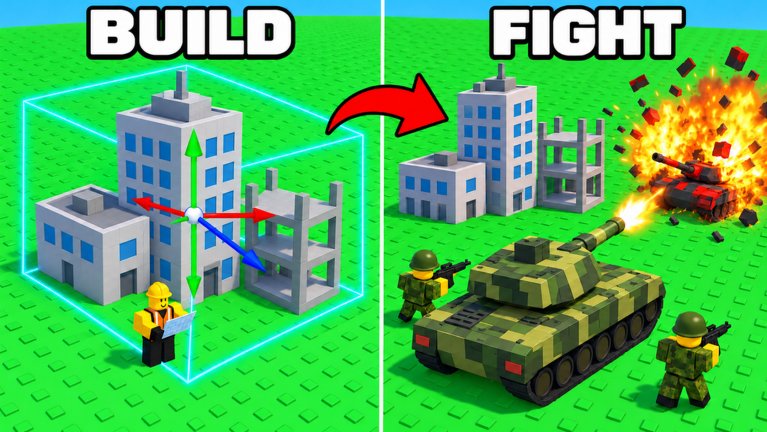
Capturing the Capital is the headline fantasy of Cities at War: grow a city, raise an army, then take the middle of the map and project power onto rival cities. The official Roblox description lists the ladder clearly — outposts, firebases, oil rigs, and the Capital — inside servers capped at six players. This guide focuses on when and how to contest the Capital without inventing fake troop counts. It builds on public gameplay coverage and the systems already documented across this wiki.
If you still need the early ladder, start with Capture Points and Getting Started.
What the Capital actually represents
The Capital sits at the center of the contested map fantasy. Holding it paints a target on your city and usually means you already climbed through forward markers. Gameplay listicles describe the same arc: expand the city, grow the army, conquer checkpoints, then take the middle and pressure other players’ bases. That means the Capital is a late-map objective, not a minute-ten ego click.
Treat Capital control as a project with three bills:
- Army bill — enough researched force to win the fight and replace losses.
- Income bill — docks and production that keep paying while the fight runs.
- Home bill — a guard that survives opportunistic raids while your main stack is away.
Fail any bill and the Capital becomes a temporary screenshot.
Prerequisites before you march mid-map
Do not open a Capital attempt until most of these are true:
- Farms, mines, mills, and housing form a finished offline-capable loop (Economy and Docks).
- Research has raised army strength or the bottleneck that was stalling training (Research Tree).
- Barracks can field soldiers plus at least one higher tier (tanks and/or air) that matches what you see on the map (Army Build).
- You already hold or can quickly retake a nearby outpost / firebase so retreats have a staging tile (Capture Points).
- A home guard remains in the city with tower coverage on real approaches (Defend Your City).
Soft unit priorities on the Tier List help you spend the war chest on answers instead of vanity jets.
Stage through oil and firebases
Oil rigs and firebases exist to teach projection. Use them as checkpoints:
- Secure an outpost you can reinforce in under a short march.
- Contest a firebase when your replacement wave is already training.
- Touch oil only when you can leave a garrison or rotate fast enough that rivals cannot free-farm the node behind you.
- Open the Capital window when at least one rival army is busy elsewhere — or when you clearly lead research and income.
Skipping straight from a fresh barracks to Capital mid often feeds a stronger neighbor who was waiting for someone else to soften the point.
How to fight the Capital engagement
Capital fights are multiplayer events even when only two names show on the objective. Practical habits from coverage and six-player reality:
- Arrive with a composition, not a blob. Soldiers hold space after breakthroughs; tanks and air help crack defended approaches. Know soft counters from Unit Counters.
- Stagger waves. A single all-in that fails empties your city. Keep a refresh queue at barracks.
- Watch the other four players. Someone always third-parties a Capital brawl. If two giants collide, be the third — or be nowhere near it until they burn out.
- Leave a path home. If your city starts smoking, recall before you “almost” finish a doomed capture.
- Do not park the entire air wing on the point with zero infantry. Space control needs bodies that stay.
After you take it, the job flips to holding. Capture income means nothing if the next lobby member walks through an empty core.
After you take the Capital
- Refresh the home guard and repair production first.
- Sell a disciplined dock batch if prices are high — fund the next wave, do not panic-dump.
- Decide whether to press a rival city or consolidate oil/firebases. Overextending after a Capital win is how lead players donate the map.
- Scout visits: who rebuilt barracks, who went AFK, who is sneaking your docks approach (Players).
- Recheck Updates after place stamps — Capital difficulty can shift with balance passes.
Common Capital failures
- Rushing mid with farms unfinished and no offline loop.
- Spending the whole treasury on one air spike with no soldiers to occupy.
- Ignoring oil/firebase staging so every retreat is a full reset.
- Celebrating in chat while a third player raids your undefended mills.
- Trusting “ally” promises without watching their barracks movement.
Related guides
- Capture Points — full ladder and hold rules
- Army Build — soldiers through drones
- Unit Counters — soft answers before you march
- Defend Your City — home guard while you are mid-map
- Tips and Tricks — habits that fund the push
- Players — six-seat diplomacy and third-party timing
- Tier List — soft unit and building spends
Take the Capital when the three bills are paid. In Cities at War, the mid-map crown belongs to the city that can win the fight and still be standing when the next rival notices.
Frequently Asked Questions
Quick answers for Cities at War on Roblox.
When should I try to capture the Capital in Cities at War?
After you have a working economy, researched army strength, a holdable staging point, and a home guard. Early Capital ego pushes usually feed stronger neighbors.
Do I need oil rigs before the Capital?
You should usually stage through outposts, firebases, and oil pressure so retreats and garrisons exist. Skipping the ladder is how armies vanish mid-map — see Capture Points.
What army should I bring to the Capital?
A mix that can break defenses and then hold space — typically researched soldiers plus armor and/or air based on what rivals field. Soft answers are in Unit Counters.
What happens after I capture the Capital?
Refresh home defense, repair income, and decide whether to consolidate or press a rival. Empty cores get raided while you celebrate.
Is the Capital the same as attacking another player city?
No. The Capital is the mid-map objective; visiting or taking rival cities is a separate pressure step once you can project force. Multiplayer context is on Players.