Cities at War Defend Your City
Keep production alive, leave a researched home guard, and rebuild in the right order when six-player lobbies come knocking.
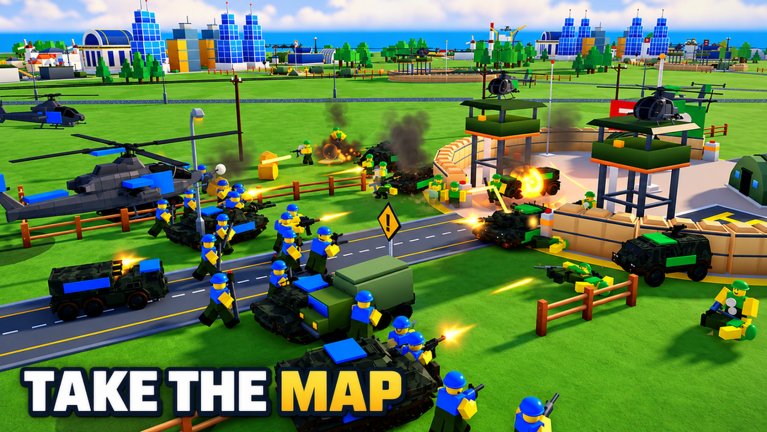
Defense in Cities at War is not a separate game mode — it is how your economy survives six-player servers while you trade, research, and contest the map. Official design expects players to visit other cities and take territory they hold. Public gameplay coverage shows the same pressure: rivals can invade, so city layout and home guards matter as much as fancy jets. This guide explains how to defend without stalling your own growth.
Build the money loop first with Getting Started, then use this page before long AFKs or Capital marches.
Why defense is an economy skill
Every raid that deletes unfinished farms also deletes offline earnings. Every panic sell after a skirmish can lock you out of the next research node. Good defense means:
- Production keeps staffing after a fight.
- Barracks can retrain while towers buy seconds.
- Your main army can leave without donating the core.
- Rebuild order restores income before vanity.
Soft building priorities for farms, homes, builder huts, barracks, and sniper towers live on the Buildings Tier List.
Layered layout that absorbs hits
Gameplay footage often places military deeper in the plot while farms and housing sit closer to contested edges — so an invasion burns outer structures before it reaches training capacity. Translate that into a practical layer cake:
- Outer buffer — space, low-priority buildings, or tower eyes on real approach lanes.
- Economy core — farms, mines, mills, homes, builder huts clustered and staffed.
- Military district — barracks facing a clean map exit, with a home-guard rally that does not block sorties.
- Repair access — builders that can reach damaged nodes without demolishing half the city.
Detailed placement patterns are in Base Layout. Controls for rotate and sell live in Controls.
Home guard rules that actually work
A home guard is a researched force that stays when the main stack marches. Soft rules:
- Never select-all your entire army for an outpost if the city will sit empty.
- Prefer a soldier core that holds space; add towers on chokes rather than tower-only greed.
- Match guard strength to lobby risk — fuller six-seat servers need more left behind (Players).
- Refresh the guard after every capture wave; Capital attempts especially drain attention mid-map (Capture the Capital).
Unit roles and counters are in Army Build and Unit Counters.
Sniper towers and approach control
Towers buy time; they do not capture the Capital. Place them where attackers actually path — dock approaches, economy edges, barracks lanes — with overlapping fields. Isolated corner towers waste cash. Pair towers with mobile units so anything that leaks still meets soldiers.
If you only afford a short tower line, cover income and builder huts first. A pretty ring around empty grass helps no one.
During a raid: play the clock
When someone hits your city:
- Pull camera home immediately — tunnel vision loses cores.
- Rally the home guard to the threatened lane; do not scatter into three weak fights.
- Keep builders on repair of production and barracks, not cosmetics.
- Avoid panic-selling every dock stack unless you need one critical rebuild this second.
- Call the main army home if the Capital or oil fight is clearly lost anyway.
Winning a raid often means the attacker leaves with less than they spent while your farms turn back on.
Rebuild order after damage
- Workers and builders — housing and huts so everything else finishes.
- Production — farms, mines, mills that restore offline and dock supply.
- Barracks / training — replace the home guard before the next wave.
- Towers on real lanes — only after income can sustain them.
- Cosmetic and sprawl — last.
Fund rebuilds with disciplined dock timing from Economy and Docks and Make Money Fast.
Safer AFK defense
Offline earnings are a feature — farms, mines, mills, and homes keep paying while you are away — but full servers turn AFK cities into free farms for rivals. Before you leave:
- Finish construction queues.
- Leave a home guard and tower coverage.
- Avoid logging off while you personally hold a hot Capital or oil node.
- Prefer lower-population windows when possible.
Full checklist: AFK and Offline.
What defense is not
- Verified scripts or godmode pastes — this wiki lists none for place ID 101855821387847 as of mid-November 2026 (Scripts).
- Ignoring research because “towers will save me.”
- Declaring war on five neighbors at once with an empty core.
Related hubs
- Base Layout — placement detail
- Players — scouting and diplomacy
- Tips and Tricks — habits that prevent raids
- Capture Points — why forward nodes paint targets
- Updates — re-test after balance stamps
- Official Links — real place ID only
Defend so the city that earns offline is still there when you return. In Cities at War, the best offense is a treasury that survives the counterattack.
Frequently Asked Questions
Quick answers for Cities at War on Roblox.
How do I defend my city in Cities at War?
Layer a buffer toward approaches, keep a researched home guard, cover real lanes with sniper towers, and rebuild production before cosmetics. Details are throughout this guide and Base Layout.
Should I leave units at home when I attack?
Yes. Never empty the core for an outpost or Capital push on a six-player server. Keep a home guard and refresh it after each wave.
What should I rebuild first after a raid?
Housing and builder huts, then farms/mines/mills, then barracks training, then towers. Cosmetic fills come last.
Can players raid me while I am AFK?
Assume yes on contested servers. Finish queues, leave a guard, and follow AFK and Offline before long logoffs.
Do defense scripts exist for this game?
As of mid-November 2026 we list no verified scripts. Play clean — see Scripts — and win with layout, research, and timing.